

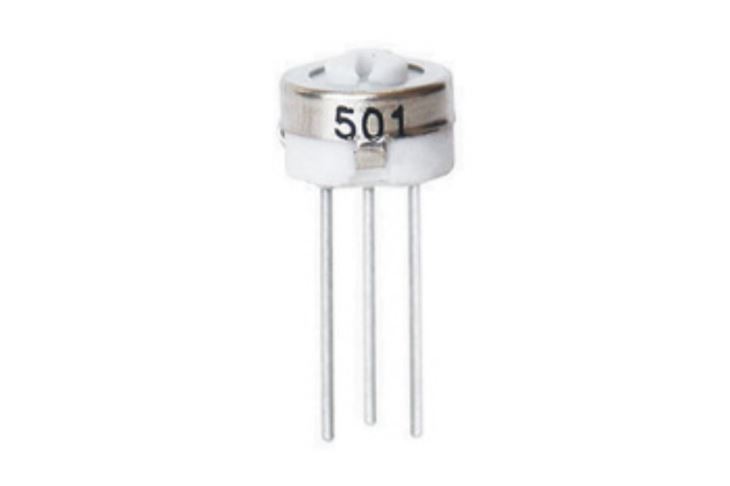
As a supplier of the 3329 Trimming Potentiometer, I often receive inquiries about various technical specifications of our products. One question that comes up frequently is, "What is the temperature coefficient of the 3329 Trimming Potentiometer?" In this blog post, I'll delve into the concept of temperature coefficient, explain its significance for the 3329 Trimming Potentiometer, and compare it with other similar products in our lineup.
Understanding Temperature Coefficient
Before we discuss the temperature coefficient of the 3329 Trimming Potentiometer, let's first understand what temperature coefficient means. In the context of electronic components like potentiometers, the temperature coefficient is a measure of how much the resistance of the component changes with temperature. It is usually expressed in parts per million per degree Celsius (ppm/°C).
A low temperature coefficient indicates that the resistance of the potentiometer changes very little with temperature variations. This is crucial in applications where stable resistance values are required over a wide temperature range. For example, in precision measurement equipment, audio amplifiers, and voltage regulators, even a small change in resistance due to temperature can lead to significant errors or performance degradation.
Temperature Coefficient of the 3329 Trimming Potentiometer
The 3329 Trimming Potentiometer is designed to offer excellent stability over a wide temperature range. It typically has a temperature coefficient in the range of ±50 ppm/°C to ±200 ppm/°C, depending on the specific model and manufacturing tolerances. This relatively low temperature coefficient ensures that the resistance of the potentiometer remains relatively stable, even when the ambient temperature fluctuates.
Let's take a closer look at what this means in practical terms. Suppose you have a 3329 Trimming Potentiometer with a nominal resistance of 10 kΩ and a temperature coefficient of ±100 ppm/°C. If the temperature changes by 50°C, the change in resistance can be calculated as follows:

Change in resistance = (Temperature coefficient × Nominal resistance × Temperature change) / 1,000,000
Change in resistance = (±100 ppm/°C × 10,000 Ω × 50°C) / 1,000,000
Change in resistance = ±5 Ω
This means that for a 50°C temperature change, the resistance of the potentiometer will change by only ±5 Ω, which is a relatively small percentage of the nominal resistance.
Importance of Temperature Coefficient in Applications
The low temperature coefficient of the 3329 Trimming Potentiometer makes it suitable for a wide range of applications. Here are some examples:
Precision Measurement Equipment
In precision measurement equipment, such as multimeters and oscilloscopes, accurate and stable resistance values are essential for obtaining reliable measurement results. The 3329 Trimming Potentiometer's low temperature coefficient ensures that the resistance remains stable, even when the equipment is used in different environmental conditions.
Audio Amplifiers
In audio amplifiers, the temperature coefficient of the potentiometer can affect the sound quality. A high temperature coefficient can cause the volume or tone settings to change with temperature, leading to inconsistent sound output. The 3329 Trimming Potentiometer's low temperature coefficient helps maintain stable audio performance, regardless of temperature variations.
Voltage Regulators
Voltage regulators are used to maintain a constant output voltage, regardless of changes in input voltage or load current. The 3329 Trimming Potentiometer's low temperature coefficient ensures that the voltage regulation remains stable, even when the temperature of the regulator changes.
Comparison with Other Trimming Potentiometers
To better understand the performance of the 3329 Trimming Potentiometer, let's compare it with two other popular trimming potentiometers in our lineup: the 3386 Trimming Potentiometer and the 3362 Trimming Potentiometer.
The 3386 Trimming Potentiometer is known for its high precision and low temperature coefficient. It typically has a temperature coefficient in the range of ±25 ppm/°C to ±100 ppm/°C, which is lower than that of the 3329 Trimming Potentiometer. This makes the 3386 ideal for applications where extremely stable resistance values are required, such as in high-precision measurement equipment and scientific instruments.
On the other hand, the 3362 Trimming Potentiometer offers a good balance between performance and cost. It has a temperature coefficient in the range of ±100 ppm/°C to ±300 ppm/°C, which is slightly higher than that of the 3329 Trimming Potentiometer. The 3362 is suitable for a wide range of general-purpose applications, where moderate stability is sufficient.
Choosing the Right Trimming Potentiometer
When choosing a trimming potentiometer for your application, it's important to consider the temperature coefficient along with other factors such as resistance range, power rating, and tolerance. If you require extremely stable resistance values over a wide temperature range, the 3386 Trimming Potentiometer may be the best choice. However, if you need a cost-effective solution with good stability, the 3329 Trimming Potentiometer or the 3362 Trimming Potentiometer may be more suitable.
Contact Us for Procurement
If you're interested in purchasing the 3329 Trimming Potentiometer or have any questions about its technical specifications, please feel free to contact us. Our team of experts is always ready to assist you in finding the right solution for your application. Whether you need a small quantity for prototyping or a large volume for mass production, we can provide you with high-quality products at competitive prices.
References
- Electronic Components: Theory and Practice by Robert T. Paynter
- Potentiometer Handbook by Bourns, Inc.


