

Hey there, electronics enthusiasts! As a supplier of the 3386 Trimming Potentiometer, I often get asked if this little component can be used in millimeter - wave circuits. Today, I'm gonna break it down for you and give you the low - down on whether the 3386 is a good fit for those high - frequency applications.
First off, let's understand what millimeter - wave circuits are. Millimeter - wave frequencies range from 30 GHz to 300 GHz. These frequencies are used in a variety of applications, such as 5G communication, radar systems, and satellite communication. The components used in these circuits have to meet some pretty strict requirements. They need to have low loss, high isolation, and be able to handle high - frequency signals without introducing too much distortion.
Now, let's talk about the 3386 Trimming Potentiometer. The 3386 Trimming Potentiometer is a single - turn potentiometer. It's commonly used in audio circuits, power supplies, and other low - to - medium - frequency applications. It's known for its reliability, ease of use, and relatively low cost.
One of the main issues with using the 3386 in millimeter - wave circuits is its frequency response. Potentiometers like the 3386 are designed for lower frequencies. At millimeter - wave frequencies, the parasitic capacitances and inductances in the potentiometer start to have a significant impact on its performance. These parasitic elements can cause signal attenuation, phase shift, and impedance mismatches.
For example, the capacitance between the wiper and the resistive element of the potentiometer can act as a low - pass filter. At millimeter - wave frequencies, this capacitance can cause a significant reduction in the signal amplitude. The inductance of the leads and the resistive element can also introduce phase shifts and impedance variations, which can disrupt the proper functioning of the millimeter - wave circuit.
Another factor to consider is the physical size of the 3386 Trimming Potentiometer. In millimeter - wave circuits, the size of the components is crucial. The wavelength of millimeter - wave signals is very short, typically in the millimeter range. Components need to be small enough so that they don't cause significant scattering or reflections of the signals. The 3386 potentiometer is relatively large compared to the components typically used in millimeter - wave circuits. This large size can lead to increased signal loss and interference.
However, there are some situations where the 3386 might be used in a millimeter - wave system, but not directly in the millimeter - wave signal path. For instance, it could be used in a control circuit that adjusts the bias or gain of other components in the system. In this case, the 3386 would be operating at a much lower frequency and wouldn't be subject to the same high - frequency limitations.
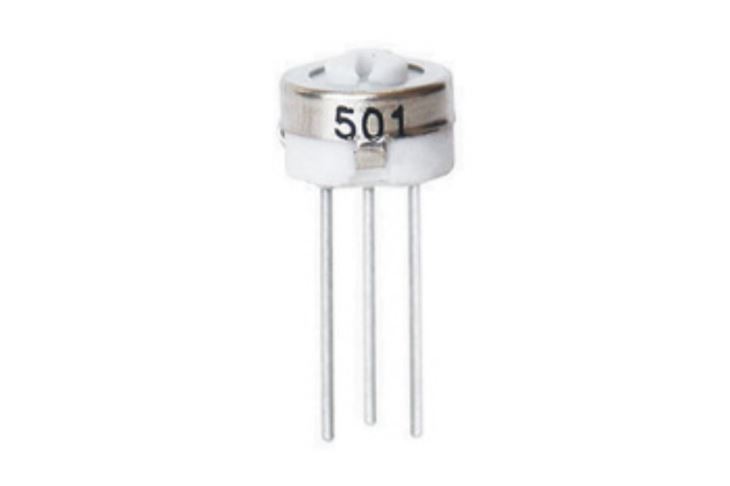

Let's compare the 3386 with some other trimming potentiometers. The 3362 Trimming Potentiometer and the 3329 Trimming Potentiometer are also popular single - turn potentiometers. Like the 3386, they are not designed for millimeter - wave frequencies. But each has its own characteristics. The 3362 might have a different resistance range or a different form factor, which could make it more suitable for certain applications. The 3329, on the other hand, might have better temperature stability or a different power rating.
So, can the 3386 Trimming Potentiometer be used in millimeter - wave circuits? In most cases, the answer is no. But that doesn't mean it's not a valuable component. It's still an excellent choice for a wide range of low - to - medium - frequency applications. If you're working on a project that requires precise resistance adjustment in an audio circuit, a power supply, or a control circuit, the 3386 is a great option.
If you're interested in learning more about the 3386 Trimming Potentiometer or other potentiometers we offer, don't hesitate to reach out. Whether you're a hobbyist working on a small project or an engineer designing a large - scale system, we're here to help you find the right components for your needs. We can provide you with detailed technical specifications, samples, and pricing information. So, if you're looking to make a purchase or just want to have a chat about your requirements, get in touch. We're always happy to assist and start a fruitful business relationship.
References
- "Millimeter - Wave Integrated Circuits and Systems" by Tatsuo Itoh and Kai Chang
- "Electronic Circuit Analysis" by Donald A. Neamen


