

As a supplier of the 3329 Trimming Potentiometer, I've had numerous in - depth discussions with engineers, technicians, and hobbyists about the electrical properties of this remarkable component. One of the most frequently asked questions is how the electrical properties of the 3329 potentiometer change with temperature. In this blog, I'll delve into this topic to provide you with a comprehensive understanding.
Basic Understanding of the 3329 Trimming Potentiometer
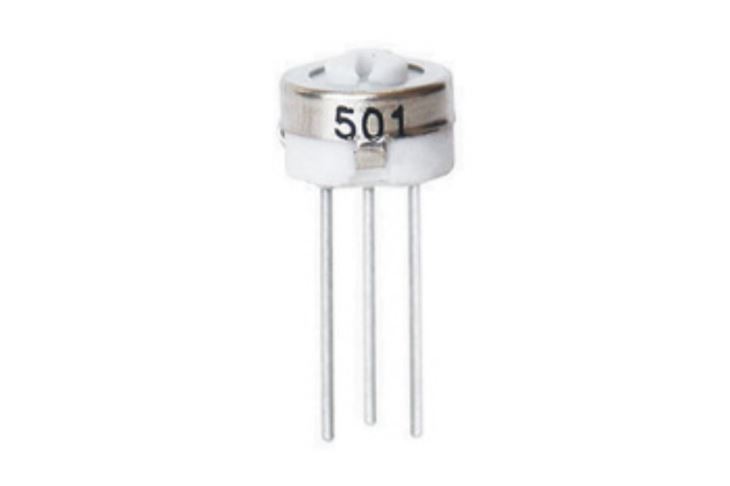
The 3329 Trimming Potentiometer is a single - turn device that offers precise resistance adjustment. It finds its applications in a wide range of electronic circuits, including audio equipment, power supplies, and measurement instruments. The fundamental function of a potentiometer is to divide voltage by varying the resistance between its terminals.
In the 3329 potentiometer, a resistive element is connected between two fixed terminals, and a wiper moves along this element to change the resistance between the wiper terminal and one of the fixed terminals. This resistance adjustment is crucial for fine - tuning the performance of electronic circuits.
Temperature and Electrical Resistance
Temperature is a key environmental factor that can significantly influence the electrical properties of electronic components, including potentiometers. The relationship between temperature and electrical resistance is governed by the temperature coefficient of resistance (TCR). TCR is defined as the fractional change in resistance per degree Celsius change in temperature.
Mathematically, TCR ($\alpha$) is expressed as:
$\alpha=\frac{1}{R}\frac{dR}{dT}$
where $R$ is the resistance and $T$ is the temperature.
For most materials used in potentiometers, the resistance increases with an increase in temperature. This is because as the temperature rises, the atoms in the resistive material vibrate more vigorously. These vibrations impede the flow of electrons, thereby increasing the resistance.
Impact of Temperature on the 3329 Potentiometer
Resistance Variation
In the 3329 potentiometer, the resistive element is made of a specific material with its own TCR. As the temperature changes, the resistance of the resistive element changes accordingly. This resistance variation can lead to changes in the output voltage of the potentiometer, which may affect the performance of the entire circuit.
For example, in a voltage - dividing circuit using the 3329 potentiometer, if the resistance of the potentiometer increases due to a rise in temperature, the voltage across the load connected to the wiper terminal will change. This can cause issues such as inaccurate signal levels in audio circuits or incorrect voltage regulation in power supplies.
Contact Resistance
Another important aspect is the contact resistance between the wiper and the resistive element. The contact resistance can also be affected by temperature. At higher temperatures, the metal of the wiper and the resistive element may expand, which can change the contact area and the pressure between them. This, in turn, can lead to variations in the contact resistance.
A change in contact resistance can introduce noise and instability in the potentiometer's output. In precision measurement applications, even a small change in contact resistance can result in significant measurement errors.
Comparison with Other Trimming Potentiometers
To better understand the temperature - related behavior of the 3329 potentiometer, it's useful to compare it with other similar products, such as the 3386 Trimming Potentiometer and the 3362 Trimming Potentiometer.
The 3386 potentiometer is designed for applications that require higher precision and stability. It often has a lower TCR compared to the 3329 potentiometer, which means its resistance changes less with temperature. This makes it more suitable for applications where temperature stability is critical, such as in high - end audio amplifiers or precision measurement devices.
On the other hand, the 3362 potentiometer is known for its durability and wide operating temperature range. While its TCR may be comparable to or slightly different from that of the 3329 potentiometer, its robust construction allows it to withstand more extreme temperature conditions without significant degradation in performance.
Mitigating Temperature Effects
When using the 3329 potentiometer in applications where temperature stability is crucial, several strategies can be employed to mitigate the effects of temperature on its electrical properties.
Thermal Compensation
One approach is to use thermal compensation techniques. This can involve using additional components, such as thermistors, in the circuit. A thermistor is a temperature - sensitive resistor whose resistance changes in a predictable way with temperature. By connecting a thermistor in a specific configuration with the 3329 potentiometer, the overall resistance of the circuit can be made less sensitive to temperature changes.
Temperature - Controlled Environments
Another option is to operate the potentiometer in a temperature - controlled environment. This can be achieved by using enclosures with heating or cooling systems. In industrial applications, for example, electronic cabinets may be equipped with air - conditioning units to maintain a stable temperature inside, ensuring the reliable operation of the 3329 potentiometer and other components.
Conclusion
The electrical properties of the 3329 Trimming Potentiometer are indeed affected by temperature. The resistance of the resistive element and the contact resistance can change with temperature, which may impact the performance of the electronic circuits in which it is used. However, by understanding the relationship between temperature and electrical properties, and by employing appropriate mitigation strategies, the negative effects of temperature can be minimized.
If you're involved in projects that require precise resistance adjustment and are considering using the 3329 Trimming Potentiometer, I encourage you to reach out for more detailed information. Whether you're an engineer working on a large - scale industrial project or a hobbyist building a small - scale electronic device, we can provide you with the necessary technical support and high - quality products. Contact us to start a procurement discussion and find the best solutions for your specific needs.

References
- Boylestad, R. L., & Nashelsky, L. (2012). Electronic Devices and Circuit Theory. Pearson.
- Sedra, A. S., & Smith, K. C. (2015). Microelectronic Circuits. Oxford University Press.


