

When embarking on an electronic project, one crucial component that often commands attention is the trimming potentiometer. Among the various options available, the 3386 Trimming Potentiometer stands out as a reliable choice for many applications. As a supplier of 3386 Trimming Potentiometers, I understand the significance of selecting the right component for your project. In this blog post, I will guide you through the process of choosing the ideal 3386 Trimming Potentiometer to meet your specific requirements.
Understanding the Basics of 3386 Trimming Potentiometers
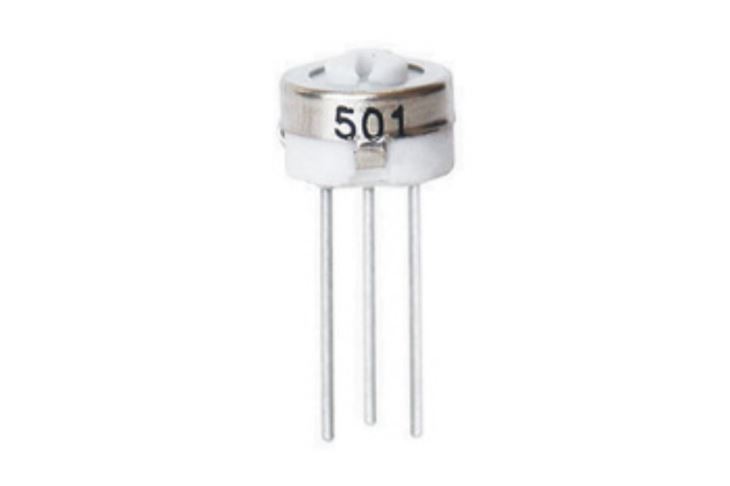
Before delving into the selection process, it's essential to have a clear understanding of what a 3386 Trimming Potentiometer is and how it functions. A trimming potentiometer, also known as a trim pot, is a variable resistor that allows for fine adjustments of electrical resistance. The 3386 Trimming Potentiometer is a single - turn device, which means it can be adjusted through a single rotation of its shaft. It is commonly used in applications where precise calibration of voltage, current, or signal levels is required, such as in audio equipment, power supplies, and test instruments.
Key Parameters to Consider
Resistance Value
The first and perhaps most important parameter to consider when choosing a 3386 Trimming Potentiometer is its resistance value. The resistance value determines the range of electrical resistance that the potentiometer can provide. It is typically specified in ohms (Ω). When selecting a resistance value, you need to consider the requirements of your circuit. For example, if you are working on a voltage - dividing circuit, the resistance value of the potentiometer will affect the output voltage. You should choose a resistance value that is compatible with the other components in your circuit and can provide the desired level of adjustment.

Tolerance
Tolerance refers to the allowable deviation from the specified resistance value. For instance, a potentiometer with a 5% tolerance means that its actual resistance can vary by up to 5% from the stated value. A lower tolerance indicates a more precise potentiometer. In applications where high precision is required, such as in medical equipment or high - end audio systems, you may want to choose a 3386 Trimming Potentiometer with a low tolerance, such as 1% or 2%. However, if your application can tolerate some variation in resistance, a potentiometer with a higher tolerance may be sufficient, which can also be more cost - effective.
Power Rating
The power rating of a 3386 Trimming Potentiometer is the maximum amount of power it can safely dissipate without being damaged. It is typically specified in watts (W). When current flows through the potentiometer, it generates heat due to the resistance. If the power dissipated exceeds the power rating of the potentiometer, it can overheat and fail. You need to calculate the power that will be dissipated in the potentiometer based on the current flowing through it and the voltage across it using the formula (P = I^{2}R) (where (P) is power, (I) is current, and (R) is resistance). Then, choose a potentiometer with a power rating that is higher than the calculated power to ensure reliable operation.
Temperature Coefficient
The temperature coefficient of a potentiometer indicates how its resistance changes with temperature. It is usually expressed in parts per million per degree Celsius (ppm/°C). A low temperature coefficient means that the resistance of the potentiometer will change very little with temperature variations. In applications where the operating temperature can vary significantly, such as in automotive or industrial environments, it is important to choose a 3386 Trimming Potentiometer with a low temperature coefficient to maintain stable performance.
Package and Mounting Options
Package Size
The package size of the 3386 Trimming Potentiometer is an important consideration, especially if you are working on a compact project. Potentiometers come in various package sizes, and you need to choose one that can fit within the available space on your printed circuit board (PCB). Smaller package sizes are suitable for projects with limited space, while larger packages may offer better heat dissipation and mechanical stability.
Mounting Style
There are different mounting styles available for 3386 Trimming Potentiometers, including through - hole and surface - mount. Through - hole potentiometers have leads that are inserted through holes in the PCB and soldered on the other side. They are relatively easy to install and are suitable for prototyping and hand - soldering. Surface - mount potentiometers, on the other hand, are mounted directly on the surface of the PCB. They are more suitable for high - volume production and can save space on the PCB.
Comparison with Other Trimming Potentiometers
It's also beneficial to compare the 3386 Trimming Potentiometer with other popular trimming potentiometers, such as the 3329 Trimming Potentiometer and the 3362 Trimming Potentiometer. The 3329 Trimming Potentiometer is also a single - turn device but is generally smaller in size compared to the 3386. It is often used in applications where space is extremely limited. The 3362 Trimming Potentiometer has a larger package and may offer better power - handling capabilities and mechanical stability. When choosing between these options, you need to weigh the specific advantages and disadvantages of each based on your project requirements.
Quality and Reliability
When sourcing a 3386 Trimming Potentiometer, it's crucial to consider the quality and reliability of the component. Look for potentiometers that are manufactured by reputable suppliers. High - quality potentiometers are made with better materials and more precise manufacturing processes, which can result in longer lifespan, better performance, and fewer failures. You can also check for certifications such as ISO 9001, which indicates that the manufacturer has a quality management system in place.
Conclusion
Choosing the right 3386 Trimming Potentiometer for your project requires careful consideration of various factors, including resistance value, tolerance, power rating, temperature coefficient, package size, and mounting style. By understanding these parameters and comparing different options, you can select a potentiometer that will meet the specific requirements of your project and ensure reliable operation.
As a supplier of 3386 Trimming Potentiometers, we are committed to providing high - quality components that meet the diverse needs of our customers. If you have any questions about choosing the right 3386 Trimming Potentiometer for your project or would like to discuss your procurement requirements, please feel free to reach out to us. We are here to assist you in making the best choice for your project.
References
- "Electronic Components and Their Applications" by T. K. Bhattacharya
- "The Art of Electronics" by Paul Horowitz and Winfield Hill


